Sunday, November 24, 2013

You know that circuses such as Ringling Bros. and Barnum & Bailey Circus beat, chain, and electro-shock elephants, right? Do all your friends know?

Ringling doesn’t want photos like this of its baby-elephant “training” to get around.

Ringling baby elephant training
The circus wants to continue saying that it’s “saving” elephants by breeding them, only to chain them for up to 100 hours at a time and force them to perform tricks. Well, too bad, Ringling—we know better!

Elephants never forget—and with your help, your friends won’t either!

August 3 is Elephant Awareness Day in Los Angeles, but you can help from any city on any day in the world by sharing the photo below online!
ringling brothers circus

 Share this pic and submit a screenshot for 1,000 points!

Don’t forget to submit your screenshot! Once you submit it, you’ll score 1,000 Street Team points that you can use later to get FREE peta2 swag like T-shirts, books, and more!

Sunday, November 10, 2013

07 November 2013 November is Manatee Awareness Month Elizabeth Fleming

November is Manatee Awareness Month

It’s Manatee Awareness Month – a time to celebrate the gentle giants that are our official state marine mammal here in Florida. Relatives of the elephant, manatees spend a lot of time grazing on seagrasses in shallow water, and are sometimes referred to as sea cows. Because Florida manatees are an endangered species, it’s especially important that people know more about these wonderful animals and what we can do to protect them.
Manatee at Crystal River, © David Hinkel/USFWS
© David Hinkel/USFWS
Sadly, as we reported this spring, this has been a particularly brutal year for manatees. In fact, 2013 is now the deadliest year on record for the number of manatees killed: a total of 771 manatees as of November 5, 2013 and we still have nearly two months to go.
What made 2013 so deadly? It was due in large part to two unusual algal blooms, one on each coast. The toxic red tide bloom on the Gulf coast killed many manatees directly, while the “brown tide” in the Indian River Lagoon killed off much of their food supply. These two unprecedented events, coupled with the usual threats manatees encounter every year – especially injuries from watercraft – have dealt a significant loss to the population, estimated at around 5,000 animals.
With winter approaching, and so many manatees lost already, it’s more important than ever that they find safe, warm water in which to spend the next few months. The greatest long-term threat to manatees involves the loss of warm-water habitat that they need to survive. Manatees become susceptible to cold stress when water temperatures dip below 68 degrees Fahrenheit. Because residential development has greatly reduced the natural warm-water springs used by manatees, many of the animals aggregate in the outfalls at electric power plants on cold winter days. A significant number of manatees could be lost in the next few decades if natural areas are not available to manatees as aging plants are shut down or experience equipment failure.
To help make traveling to and within warmer waters safer for manatees, a number of seasonal manatee slower-speed protection zones go into effect on November 15 throughout the state. Boaters can help these slow-moving animals by reducing their speed and being alert to the presence of manatees, such as seeing a snout, tail or a large swirl on the surface of the water. Obeying posted speed zones, wearing polarized sunglasses and watching out for manatees can all help save their lives.
manatee
You can also help manatees at our Wildlife Adoption Center! Click the photo to learn more.
There are also other ways that everyone, whether you live and boat in Florida or not, can help manatees. You can visit our website to learn more about these fascinating marine mammals, and share what you know with family and friends; conservation starts with awareness! You can also help by supporting programs that strengthen the Endangered Species Act, which has been vital to manatees’ survival, and Everglades restoration, which will be extremely important to their future. And of course, you can help by supporting Defenders’ efforts. We work to conserve and recover the Florida manatee by protecting habitat, reducing watercraft strikes, improving coastal policies and increasing enforcement of those policies. We advocate for officials and state wildlife agencies to preserve and restore natural springs, conserve seagrass habitat, expand protected areas, designate and enforce protective speed zones and safeguard state and federal policies that protect manatees.
Elizabeth Fleming is Defenders’ Florida Representative

Sunday, November 3, 2013

Newly-Discovered Species Could Be Just What Humpback Dolphins Need to Survive by Judy Molland November 2, 2013


  • 7:00 am
Newly-Discovered Species Could Be Just What Humpback Dolphins Need to Survive
Researchers have identified a previously unknown species of humpback dolphin living off the coast of Australia. This is exciting in itself, but could also be an important first step in efforts to conserve the dwindling numbers of dolphins.
As Care2 reported last year, when it comes to the Endangered Species List, some animals stand out as celebrities: polar bears, giant pandas, rhinos and snow leopards, for example. But sadly, the list is so extensive that there are many species you may never have suspected are endangered.
The dolphin is one of those species.
Researchers have identified four species in the humpback genus: the Atlantic humpback dolphin, found in waters off West Africa; the Indo-Pacific humpback, whose habitat ranges from the central to western Indian Ocean; another species of Indo-Pacific humpback, which inhabits the eastern Indian and western Pacific Oceans; and this fourth, previously unknown, Australian species.
Will this new discovery save all these dolphins from extinction? That is indeed the hope.
The humpback dolphin is named for an unusual hump just below its dorsal fin.
The researchers say the discovery will improve decision-making about conservation policies to protect the dolphins’ genetic diversity and their habitats.
Discovery of the Australian humpback dolphin is announced in the latest issue of Molecular Biology.
An international team, including researchers from the Wildlife Conservation Society and the American Museum of Natural History, analyzed samples from humpback dolphins found from the eastern Atlantic to the western Pacific oceans, looking for significant variations in DNA.
The team also compared physical features from 180 humpback dolphin skulls found on beaches in Atlantic and Pacific regions or from museum collections and concluded that this is indeed a new, genetically distinct species.
The newly identified species grows to 2.5 meters in length and ranges from dark gray to pink or white in color.
From The Telegraph:
The yet-to-be-named species has been identified through a decade-long scientific collaboration that involved genetic mapping and the physical examination of hundreds of specimens. The process, which has led to what scientists call a ‘split,’ has revealed that rather than just two species of humpback dolphins in the world there are in fact at least four.
Guido Parra, who co-authored the report that revealed the dolphin to the world, has called for the urgent re-evaluation of the species’ conservation status, and told the Telegraph he has serious concerns for its long-term survival.
Parra explained even when there was believed to be only one species of humpback dolphin in the Indian and Pacific Oceans, that species was considered near threatened. Now, with the reclassification in to four species, Parra believes that they should be reclassified as highly vulnerable, or even endangered.
One major threat to the dolphin off the coast of Australia is habitat degradation due to coastal development and mining and resource exploitation, including shipping associated with mining developments.
According to Scientific American, there are six coal export-related development or expansion proposals under assessment by the Great Barrier Reef Marine Park Authority. It seems that Australia’s coal industry wants to build a series of ports adjacent to the reef to expedite the exportation of their toxic product.
Even worse, Australian local media is reporting that members of the body charged with protecting the Great Barrier Reef, one of the habitats in which the dolphin is found, have links to mining and resource companies and could benefit from port developments.
Australian environment minister Greg Hunt ordered an inquiry into the conflict of interest allegations yesterday. Hopefully, this will lead to restraining orders on those coal companies, instead of yet another senseless destruction of nature by mankind.

Read more: http://www.care2.com/causes/newly-discovered-species-could-be-just-what-humpback-dolphins-need-to-survive.html#ixzz2jd5S98yE

The Record that Changed My Life: Lamb of God's Mark Morton Discusses Megadeth's 'Peace Sells...But Who's Buying?' Posted 09/12/2013 at 9:53am | by Mark Morton


FROM THE ARCHIVE: Lamb of God's Mark Morton chooses (and discusses) the record that changed his life.
Megadeth
Peace Sells...But Who's Buying? (1986)
Peace Sells made me realize I could take all my adolescent rebelliousness and negative energy and craft it into something that was both sophisticated and dangerous.
Basically, it made me want to be a metal guitar player. Before I heard the record, I was a 13-year-old skater listening to a lot of punk: Black Flag, Bad Religion, JFA, Sucidal Tendencies, G.B.H. and Sex Pistols. It was in that context that I got a guitar and started making noise, punk-rock style.
When I heard Peace Sells, I was struck by its punk edge. It was really raw, chaotic, unrefined and dirty, in the same way punk records were. It snarled and seemed to be giving the middle finger to everything.
There was nothing classy about it, but at the same time it was smart and meaningful. I thought it was the best punk rock I'd ever heard — except it was made by dudes who could play their asses off.
I can still go back and listen to that record and get things out of it. The riff work at the end of "Wake Up Dead" is still a lesson to me. They flip time and veer off into odd time signatures, but they still maintain the groove and chunk. When you can make someone's head bob in 15/8 time, you've really achieved something. And the socially conscious lyrics are great, too.
Megadeth seem to be selling the idea that you can be rebellious and still be smart, that you can make a statement with your music and not lose any power or danger. That was a big influence on Lamb of God. We've had the opportunity to work with [Peace Sells guitarist] Chris Poland on two of our records, and those were among the coolest moments in my career.

Saturday, November 2, 2013

Hands Off! Don’t Touch the Pregnant Woman’s Belly by Robin Marty November 1, 2013


Hands Off! Don’t Touch the Pregnant Woman’s Belly

No one would ever consider placing a hand on the stomach of another man or woman without permission under normal circumstances. Yet for many people, a visibly pregnant woman is often seen as an open invitation for unwanted and non-consensual touching.
It’s a phenomenon so common that pregnancy message boards devote threads to it and lines of pregnancy t-shirts warding strangers off have been spawned because of it. Now, finally, one pregnant woman in Pennsylvania has had enough and called it what it is — harassment — and has gotten law enforcement involved.
After a Pennsylvania man came over to visit and allegedly gave his pregnant neighbor an unwanted hug, followed by a belly touching despite her objections, the mother-to-be called the police to have him charged with harassment, defined as an “action [a person takes] that has an intent to harass, annoy or alarm another person,” according to NBC.
The issue, in this case, appears to be the repeated violation of the woman’s bodily autonomy, as explained by attorney Phil DiLucente, who although not involved with the case itself explained the circumstances to CNN. “Here was a woman who was pregnant and (a) man had touched her belly area, which women have to go through all the time, and she didn’t permit him to do that, and then he repeated it, so she decided to file charges.”
We don’t have any issue with the idea of pressing charges if a person does any other inappropriate touching, be it strangers or friends. In fact, no means no in any other type of physical situation. Why do we find the line blurred when it comes to a pregnant belly?
Corporations spend thousands of dollars per company doing extensive sexual harassment training seminars, of which the basic principal is unwanted touching is never acceptable, sexual jokes and comments that make other people uncomfortable are inappropriate, and the performance of either in the workplace is a considered an offense worthy of employer reprimand or even dismissal. Few people would bat an eye over the idea of a lawsuit against a colleague or workplace that allows such a thing to continue after a person has asked for the harassing behavior to be addressed and stopped.
Yet for some reason, pregnant women are treated in a completely different sphere, as if their bodies belong to the public. Strangers on the street feel welcome to comment on a woman’s body, ask her when she is due or if she is having multiples as a means of telling her that she physically looks too large. At a time when many pregnant people are feeling more vulnerable and anxious, their behavior is up for public scrutiny as well, from what they are eating to their physical activities, such as the pregnant woman who became the focus of national attention after a picture of her lifting at 8 months pregnant hit the internet. In the tempest, critics accused her of being willing to put her baby in harm “just to stay in shape.”
If charging strangers with breaking the law is what it takes to finally convince the general public that all unwanted touching is still unwanted touching, and that a pregnant body is still the sole property of the person who is pregnant, maybe it is time. Your body belongs to you and whomever you give permission to share it with. That right stands for all people, even those who are gestating.

Read more: http://www.care2.com/causes/hands-off-dont-touch-the-pregnant-womans-belly.html#ixzz2jXEIK290

Stop Arctic Drilling


The Bureau of Ocean Energy Management is putting the Arctic Ocean in the hands of the oil industry.
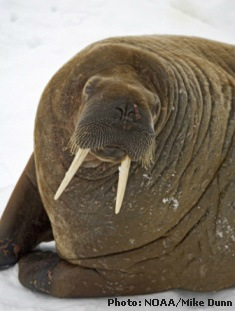
The Bureau of Ocean Energy Management (BOEM) is preparing to sell leases in the Chukchi Sea, an important habitat for polar bears, whales, walrus, and numerous species of migratory birds that depend on clean waters for feeding and breeding. As Shell’s doomed 2012 efforts showed, these companies clearly are not prepared to operate in the icy, remote seas of the Arctic.
Oceana supporters and other ocean advocates successfully kept offshore oil drilling out of the Arctic in 2013. This potential sale could open millions of additional acres to oil companies looking to drill in the Chukchi’s remote and fragile waters. Oil companies like Shell have yet to explore the leases that they already own and they have not shown that they can prevent spills, air pollution, water pollution, or noise impacts that threaten the Arctic ecosystem.
We must continue to fight to keep dangerous oil drilling out of the Chukchi Sea. Sign your name below to join a united call for a clean, healthy, oil drill-free Arctic Ocean.

SeaWorld, Inc.: humanely release the Orca whale known as Tilikum to a seapen for rehab